



Gesellschaft und Wirtschaft : Bildstatistisches Elementarwerk (Society and Economy)
“Words divide, pictures unite.” — Otto Neurath
"To remember simplified pictures is better than to forget accurate figures" —a catchphrase of the Social and Economic Museum
A SPLENDID AND RARE FIRST EDITION OF ONE OF THE FOUNDATIONAL MONUMENTS OF MODERN INFORMATION DESIGN.
A circle over a triangle tells us we are looking at the women’s bathroom, a cross may indicate a church, a little triangle atop a square tells us, instantly, that we are looking at a house. One can hardly navigate an airport or pass a driver’s test without understanding these simple pictographs.
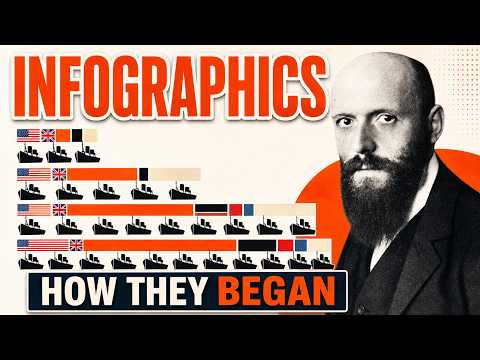
Austrian sociologist and political economist Otto Neurath had a much bigger vision for communicating information than simple pictographs. As director of the Gesellschafts- und Wirtschaftsmuseum in Wien (the Social and Economic Museum of Vienna), he wanted to democratize knowledge, believing that complicated social and economic information such as coal production, unemployment, infant mortality, automobile ownership, and global populations, could be made clear to ordinary people through a carefully designed visual language, first called the Vienna Method of Pictorial Statistics and later renamed Isotype (International System of Typographic Picture Education).
Working with German designer and social scientist Marie Reidemeister (later Marie Neurath) and German artist Gerd Arntz, the team translated raw data and abstract ideas into clear visual forms, reducing workers, ships, cars, houses, factories, and whole social systems into simple, repeatable, and easily recognizable symbols.
Numbers in a table can be hard to grasp, but show the same quantity through repeated images—one car, ten cars, a hundred cars—and the meaning becomes obvious. Pictures could do more than decorate information, they could make information understandable in something close to a universal language.
The crucial innovation was not to make a symbol bigger or smaller according to the number represented. Instead, identical symbols were repeated: one worker might stand for 100,000 workers; one ship for a million tons; one house for 10,000 homes. Among the most memorable and frequently reproduced plates are those on the motor vehicles of the world, unemployment, infant mortality and income, rubber production, coal and oil production, and ethnic groups of the world. The plates are not illustrations added to statistics. The system was simple, but the effect was radical.
It is its simplicity that makes the book so important. Although the title and labeling are in German, the plates themselves cross linguistic boundaries. Neurath, Reidemeister, and Arntz did not create a universal language in the ordinary sense, but they came remarkably close to creating a universal way of seeing information.
Leipzig: Bibliographisches Institut A.G., 1930. Oblong folio, 303 x 454 mm. Title-page, 100 color plates, and 30 pages of text. Loose as issued in original cloth folding box. Some light, general wear and soiling to box; plates fine. RARE.
Price: $18,000 .